
What if a typhoon approaches during your Japan trip?
First check whether evacuation information has been issued for the area where you're staying. If you're in a dangerous area, evacuate before the wind and rain strengthen. If roads are already flooded or fierce wind and rain make it hard to go outside, don't push on to the airport or a distant shelter. Move to somewhere safer where you are now, and follow instructions from your accommodation staff or on-site announcements. Also check separately whether your booked flights and trains are operating.
Official sources checked: 2026-10-12
If the wind and rain are strong right now
- Stop sightseeing and keep away from the coast and swollen rivers. Indoors, stay away from windows.
- If an evacuation order has been issued for your area, leave dangerous places immediately. People who need more time to evacuate, and those assisting them, must start moving at level 3 if they're in a dangerous area.
- If flooded roads or fierce wind and rain make moving dangerous, don't try to reach a distant shelter. If you can, move somewhere safer than where you are now — like an upper floor of a sturdy building away from rivers and slopes.
- Don't go outside just because the wind and rain suddenly ease. Strong winds can return after the eye of the typhoon passes.
Official sources: Fukuoka City: what to do as a typhoon approaches ↗ · Japan Meteorological Agency: weather information and when to evacuate ↗ · JNTO: who should evacuate at alert level 3 and what to do (in Korean) ↗ · JNTO: what to do when a level 4 evacuation order is issued (in Korean) ↗ · Japan Meteorological Agency: typhoon winds and the eye ↗
Source checked:
How to read Japanese signs and notices
If you see the Japanese below on signs or phone alerts, check what it means. Don't just look at the numbers — read together what danger it warns of and which areas or sections it applies to.
計画運休
MeaningThis notice says train services will be suspended in advance ahead of a typhoon or similar.
What to doIn the notice, find your travel date and line, plus the suspended sections and times. Sort out accommodation before then and change your travel plans.
This doesn't mean all trains run until the suspension starts, or that they resume first thing the next day. Check separately whether you can take other trains or buses.
Official sources: JR West: planned service suspensions ↗
Checked:
高齢者等避難
MeaningThis means people who need more time to evacuate should leave first.
What to doAt level 3, older people, people with disability, babies and young children in dangerous areas — and the people assisting them — should evacuate.
This is a level 3 notice. Everyone else should also prepare to evacuate, and leave early if needed. It applies to anyone who needs more time to move, regardless of age.
Official sources: Japan Meteorological Agency: weather information and evacuation alert levels ↗
Checked:
避難指示
MeaningThis means everyone in dangerous areas must evacuate.
What to doIf where you are is a dangerous area covered by the notice, evacuate immediately. If roads are already flooded or moving is dangerous, don't try to reach a distant shelter.
This is a level 4 notice. It applies to the areas named in the notice, so read the place names together with it.
Official sources: Japan Meteorological Agency: weather information and evacuation alert levels ↗
Checked:
緊急安全確保
MeaningThis means disaster has already struck or is about to, and you must protect yourself right now.
What to doImmediately move somewhere safer than where you are now, as far as you can. If going outside is more dangerous, don't try to move to a distant shelter.
This is level 5. You must not delay evacuating until now. An upper floor or a sturdy building isn't always safe either.
Official sources: Japan Meteorological Agency: weather information and evacuation alert levels ↗
Checked:
レベル4危険警報
MeaningThis is the level 4 danger warning issued by the Japan Meteorological Agency.
What to doCheck the hazard map around your accommodation and the local evacuation notices. If you're in a dangerous place, don't just wait for the local government's order — evacuate early.
Flood risk information from the Japan Meteorological Agency and evacuation orders from local governments play different roles. Not every warning — including 暴風警報 (storm warning) — corresponds to one of these five levels.
Official sources: Japan Meteorological Agency: weather information and evacuation alert levels ↗
Checked:
Official sources: Fukuoka City: what to do as a typhoon approaches ↗ · Japan Meteorological Agency: weather information and when to evacuate ↗ · JNTO: who should evacuate at alert level 3 and what to do (in Korean) ↗ · JNTO: what to do when a level 4 evacuation order is issued (in Korean) ↗ · Japan Meteorological Agency: typhoon winds and the eye ↗
Source checked:
Should I cancel my trip if a typhoon is forecast?
First check when the wind and rain will strengthen where you're headed, whether your accommodation is available, and whether your return transport is operating. A typhoon forecast alone does not tell you whether to cancel your whole Japan trip or whether it is safe to continue.
If you were planning to visit the coast or move to another city when the wind and rain are at their worst, it's better to scale back or postpone those plans. If transport disruptions could stop you reaching your accommodation, contact your accommodation and the companies you booked with before you leave. Ask whether you can change dates or cancel, and whether it will cost you.
If you're already in Japan, ask your accommodation staff where to get evacuation information and where to go inside the building. Charge your phone and power bank, and prepare the water and food you'll need before it becomes hard to go outside.
- Check the Japan Meteorological Agency forecast for your accommodation area and the places you'll be travelling through. First check when the forecast was issued, and don't use a track map you saved earlier for today's plans without checking again.
- Look up the hazard map for your accommodation's address to see the area's disaster risks: flooding (inundation and floods), landslides on slopes, and storm surge when a typhoon hits. Decide where you'll evacuate and how to get there before the wind and rain strengthen.
- Enter your travel date and flight number on the airline's website or app to check whether your flight is operating. For trains, check the railway company's website to see whether your line and section are running. Also look for planned service suspension notices issued ahead of the typhoon.
- Japan Meteorological Agency: checking the forecast for your area ↗
- Find evacuation notices and maps by city →
- What to pack and how to stay in touch before you travel →
Official sources: Japan Meteorological Agency: how to read typhoon track maps ↗ · Fukuoka City: what to do as a typhoon approaches ↗ · Japan Meteorological Agency Miyakojima Local Meteorological Observatory: preparing for typhoons ↗ · JR West: planned train suspensions ↗ · JAL: how to change or refund international flights when times change or flights are cancelled ↗
Source checked:
What should I look for on a typhoon track map?
Read the white dotted circle together with the forecast for your accommodation area. The white dotted circle shows the area the typhoon's centre is expected to enter. It doesn't show the typhoon's size or how far the rain will reach.
The typhoon won't necessarily follow the line drawn on the map. When reading it, distinguish between when the forecast was issued and when the typhoon is expected to arrive. The track can change, so check the latest forecast again.
There are rain clouds outside the typhoon too. Moist air flowing in from the typhoon can further develop rain clouds along nearby fronts — a front is the boundary where different air masses meet. So heavy rain can fall far from the typhoon's centre. Don't assume you're safe just because your accommodation is outside the track line.
The Japan Meteorological Agency tells you how dangerous the rain and wind will become. City and ward offices tell you who should evacuate, where and when. Don't rely on the Agency forecast alone — also check the evacuation information for the area where you're staying.
- Japan Meteorological Agency: typhoon tracking (in Korean) ↗
- What do the circles and lines on typhoon track maps mean? (Japan Meteorological Agency) ↗
Official sources: Japan Meteorological Agency: how to read typhoon track maps ↗ · Japan Meteorological Agency: why it rains far from the typhoon centre ↗ · Japan Meteorological Agency: weather information and when to evacuate ↗
Source checked:
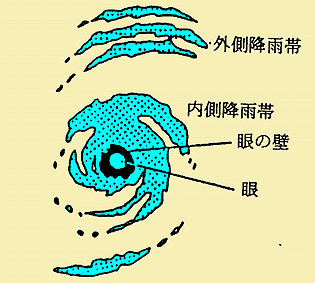
In the diagram, 眼 is the eye of the typhoon and 眼の壁 is the wall surrounding the eye. 内側降雨帯 and 外側降雨帯 are the inner and outer rainbands. Rain clouds extend beyond the centre too. This is not a map of the typhoon's current position or size.
Source: Japan Meteorological Agency "台風に伴う雨の特性" (Characteristics of rain from typhoons) · PDL1.0 · used as published · Terms of use
Sources and terms checked:
When should I evacuate from my accommodation?
If you're in a dangerous area, evacuate before the wind and rain strengthen. When a level 4 evacuation order is issued, everyone in dangerous areas must evacuate. Don't wait for level 5.
Check whether your accommodation is in the area named in the evacuation information. If it's in a low-lying spot that could flood or near a slope, ask staff where and how to evacuate. Being in a tall building doesn't mean you can just stay put.
If roads are already flooded or strong winds make moving dangerous, don't try to cross them to reach a shelter. Move to a lower-risk place you can reach now — for example, an upper floor of a sturdy building away from rivers and slopes. Protecting yourself indoors like this is what to do once going outside has become difficult. It doesn't mean you should wait until going outside is difficult.
Just because a shelter is marked on the map doesn't mean it's open now. Check city or ward notices for somewhere that can protect you from the immediate danger — such as flooding or storm surge — and whether it's currently open. You can also ask your accommodation staff or staff directing evacuations on the ground.
Level 3 · People who should evacuate early / 高齢者等避難
Older people, people with disability, babies and young children — anyone who needs more time to evacuate — and the people assisting them should evacuate early if they're in a dangerous area. Everyone else should also cut back on non-urgent outings and prepare to evacuate.
Level 4 · Everyone in dangerous areas must evacuate / 避難指示
Everyone in dangerous areas covered by the notice must evacuate immediately. If the Japan Meteorological Agency has already issued level 4-equivalent information, don't just wait for your city or ward's order. Check the risks where you are and your evacuation route, and move early.
Level 5 · Protect yourself immediately / 緊急安全確保
This is the stage where disaster has already struck or could strike at any moment, putting lives at risk. It may be hard to evacuate far, so move immediately to a lower-risk place you can reach now.
- Find evacuation notices and open shelters for your area →
- What to do when a level 4 evacuation order is issued · JNTO guide in Korean ↗
Official sources: Japan Meteorological Agency: weather information and when to evacuate ↗ · JNTO: who should evacuate at alert level 3 and what to do (in Korean) ↗ · JNTO: what to do when a level 4 evacuation order is issued (in Korean) ↗ · Fukuoka City: what to do as a typhoon approaches ↗ · Japan Meteorological Agency Miyakojima Local Meteorological Observatory: preparing for typhoons ↗
Source checked:
Which places should I avoid when the wind and rain are strong?
Stop any non-urgent outings. Indoors, stay away from windows; outdoors, keep away from the coast, swollen rivers and slopes. If roads aren't flooded and it's safe to move, take shelter in a nearby sturdy building.
If you're in your accommodation or a shop
Stay away from windows and move to where staff direct you. Don't go outside to secure balcony items or to film the storm. If there's a risk of water getting in or an evacuation order has been issued, you must not stay put just because you're indoors.
If you're in an underground shopping area or station
Move early if there's any risk of water getting in or staff direct you to evacuate. Follow staff instructions and move before water enters to somewhere above ground that flooding can't reach. Don't head underground to escape the wind and rain. Once water starts flowing down the stairs, it can become hard to climb back up.
If you're at the coast, a river or on a mountain road
Don't go near high waves or swollen water to watch. Keep away from mountain slopes and cliffs too. High waves can continue along the coast even after the typhoon has passed.
Don't go outside just because the wind and rain ease briefly or the sky clears. Inside the eye at the typhoon's centre the wind can weaken, but after the eye passes, strong winds can return from the opposite direction.
Official sources: Fukuoka City: what to do as a typhoon approaches ↗ · Osaka City: underground safety in heavy rain ↗ · Japan Meteorological Agency Miyakojima Local Meteorological Observatory: preparing for typhoons ↗ · Japan Meteorological Agency: typhoon winds and the eye ↗ · Japan Meteorological Agency: weather information and when to evacuate ↗
Source checked:
Who do I ask if flights or trains have stopped?
For flights, ask the airline and where you bought your ticket; for trains, ask the railway company or station staff. Even if your flight is operating, the trains or buses to the airport may have stopped.
If you're already at a station or the airport, follow announcements, departure boards and staff instructions. When asking, have your booking reference and flight or train name ready, along with where you're staying.
If a planned service suspension has been announced, first ask whether your accommodation is available. It's better to delay plans to move to the next city until the railway company's advice changes. Check separately whether other transport is running and whether trains will operate the next day.
Check whether your booked flight is operating
Look it up on the airline's website or app with your travel date and flight number. Check whether the departure time has changed or the flight has been cancelled. If you need to change or cancel your booking, ask whether different change and refund rules apply to this flight. If you bought through a travel agent, contact them too.
Check when trains stop running
If a planned service suspension (計画運休) notice has been issued, check the date, line, suspended sections and scheduled start time. These notices go out in advance when major typhoon disruption is expected. Don't plan to sightsee until that time and catch the last train back.
Check whether you can get to the airport
Check each operator's website to see whether the trains and buses from your accommodation to the airport are running. Trains stopping doesn't mean you can just take a taxi or travel safely by road. If travelling is dangerous, first tell the airline and where you bought your ticket about your situation.
- What to do when your flight is delayed or cancelled →
- Finding transport in Japan →
- Why does JR West suspend trains in advance? ↗
Official sources: JR West: planned service suspensions ↗ · JAL: how to change or refund international flights when times change or flights are cancelled ↗ · Fukuoka City: what to do as a typhoon approaches ↗
Source checked:
Can I resume travelling straight after the typhoon passes?
Don't set out just because it's calm outside your window. First check the local weather information and evacuation notices, then confirm your accommodation is available and your flights, trains and buses are operating before deciding what's next.
If you need to change or cancel bookings, contact your accommodation and the companies you booked with. Ask each of them whether you can cancel for free, whether seats are available on other flights, and whether extra accommodation costs will be covered. A typhoon doesn't guarantee any of this. Keep your updated booking details and any messages you receive. If you're using travel insurance, ask your insurer what documents you need and how to claim.
- First check how the local evacuation notices have changed. Even once the typhoon's centre has moved away, high waves and rain can still be dangerous. Don't go sightseeing at the coast, rivers or slopes.
- Ask your accommodation staff whether your accommodation is available, whether water and power are on, and whether you can come and go freely. If you can't stay there, ask local staff to direct you to a shelter or somewhere to stay.
- Check again whether your booked flight and the trains and buses to the airport are operating. Trains don't start running again just because the rain stops. Don't head to the station based only on a notice saying when services are expected to resume — follow the actual operating status.
Official sources: Japan Meteorological Agency: why it rains far from the typhoon centre ↗ · Japan Meteorological Agency Miyakojima Local Meteorological Observatory: preparing for typhoons ↗ · Japan Meteorological Agency: weather information and when to evacuate ↗ · JR West: planned service suspensions ↗ · JAL: how to change or refund international flights when times change or flights are cancelled ↗ · JNTO: traveller support hotline and emergency contacts ↗
Source checked:
Who do I call if I'm hurt or need help?
If you urgently need an ambulance or the fire brigade, call 119 in Japan. If a disaster has caused you trouble while travelling and you'd like advice, you can contact the JNTO traveller support hotline.
The JNTO Japan Visitor Hotline is 050-3816-2787 within Japan and +81-50-3816-2787 from overseas. It takes calls about accidents, illness and disasters in Korean, English and Chinese, 24 hours a day. If you need an emergency response, call 119 first rather than this number.
When the call connects, tell them your accommodation name and address, where you are now and what help you need. See the shelter guide below for how to find a shelter and ask staff for water, medicine or interpreting. Supplies and interpreting are not always available.
- If you urgently need an ambulance or fire brigade: 119 →
- JNTO traveller support hotline · 050-3816-2787 →
- How to ask shelter staff for help →
Official sources: JNTO: traveller support hotline and emergency contacts ↗ · JNTO: what to do when a level 4 evacuation order is issued (in Korean) ↗
Source checked:
Related guides
Frequently asked questions
Is it fine if my accommodation is outside the typhoon's track?
Don't assume you're safe just because you're outside the track line. The circle on the forecast map shows where the typhoon's centre is expected to go — not how far the rain will reach. Heavy rain can fall far from the centre. Check the weather information for your accommodation area together with your city or ward's evacuation notices.
Official sources: Japan Meteorological Agency: how to read typhoon track maps ↗ · Japan Meteorological Agency: why it rains far from the typhoon centre ↗ · Japan Meteorological Agency: weather information and when to evacuate ↗
Source checked:
Can I go outside if the wind suddenly drops?
Don't go outside just because things go quiet for a moment. Inside the eye of the typhoon the wind can weaken and the sky can clear, but after the eye passes, strong winds can return from the opposite direction. Follow the latest weather information and evacuation notices for your area.
Official sources: Japan Meteorological Agency: typhoon winds and the eye ↗ · Japan Meteorological Agency: weather information and when to evacuate ↗
Source checked:
Can I stay at my accommodation until an evacuation order is issued?
If you're in a dangerous area, don't just wait for an evacuation order. If the Japan Meteorological Agency has issued level 3 or 4-equivalent information, check the risks where you are and your evacuation route, and move early. Older people, people with disability, babies and young children — anyone who needs more time to evacuate — and the people assisting them should start evacuating at level 3 if they're in a dangerous area.
Official sources: Japan Meteorological Agency: weather information and when to evacuate ↗ · JNTO: who should evacuate at alert level 3 and what to do (in Korean) ↗
Source checked:
Can I go to an underground shopping area or station to escape the wind and rain?
Don't take shelter in underground spaces where water could get in. If water starts pouring down the stairs, it can become hard to get back above ground. If you're already underground, evacuate early following staff instructions, before water gets in.
Official sources: Osaka City: underground safety in heavy rain ↗
Source checked:
If my flight is operating, can I head to the airport?
Check whether the trains or buses to the airport are running and whether the route is safe. Even if your flight is operating, transport to the airport may have stopped. If travelling is dangerous or transport is cut off, don't push ahead — tell the airline and where you bought your ticket about your situation and ask how to change your booking.
Official sources: JR West: planned service suspensions ↗ · JAL: how to change or refund international flights when times change or flights are cancelled ↗ · Fukuoka City: what to do as a typhoon approaches ↗
Source checked:
Can I cancel flights and accommodation for free with just a typhoon forecast?
Not all bookings can be cancelled for free. Ask the airline whether different change and refund rules apply to your booked flight, and ask where you bought your ticket about the process. Accommodation has different booking conditions, so contact them separately. If your flight is cancelled, ask the airline and the place of purchase how you can change or refund that flight.
Official sources: JAL: how to change or refund international flights when times change or flights are cancelled ↗
Source checked:
Official sources for this guide
Check local notices for current warnings and access restrictions. For whether trains and flights are running, check the transport operators' latest notices.
Official sources: Japan Meteorological Agency: how to read typhoon track maps ↗ · Japan Meteorological Agency: why it rains far from the typhoon centre ↗ · Japan Meteorological Agency: typhoon winds and the eye ↗ · Japan Meteorological Agency: weather information and when to evacuate ↗ · JNTO: who should evacuate at alert level 3 and what to do (in Korean) ↗ · JNTO: what to do when a level 4 evacuation order is issued (in Korean) ↗ · Fukuoka City: what to do as a typhoon approaches ↗ · Japan Meteorological Agency Miyakojima Local Meteorological Observatory: preparing for typhoons ↗ · Osaka City: underground safety in heavy rain ↗ · JR West: planned service suspensions ↗ · JAL: how to change or refund international flights when times change or flights are cancelled ↗ · JNTO: traveller support hotline and emergency contacts ↗
Source checked: